What is CUSMA, and how does it affect Canadian procurement in 2026?
CUSMA sets the rules on who can bid on Canadian government contracts. Here's what it means for your business in 2026.
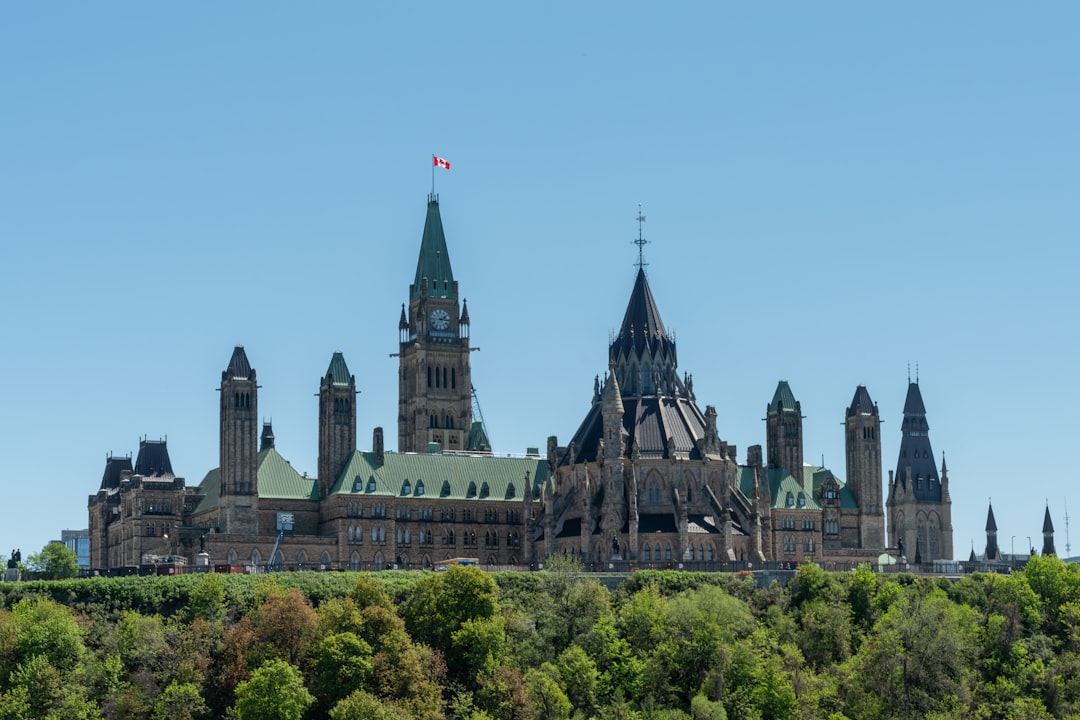 Photo by Aleksandr Galenko on Unsplash
CUSMA is the trade deal between Canada, the United States and Mexico. It sets rules for how goods and services move across the three countries, and it shapes which government contracts your business can even bid on. If you sell to government buyers in Canada, understanding CUSMA is not optional — it decides who you're allowed to compete against, and increasingly, whether "Canadian-made" gives you an edge.
What CUSMA actually is
CUSMA stands for the Canada-United States-Mexico Agreement. It replaced the older NAFTA (North American Free Trade Agreement) in 2020. Americans call the same deal USMCA, and Mexicans call it T-MEC — three names, one agreement.
At its core, CUSMA is a set of rules that the three countries agreed to follow. It covers many things: tariffs on goods, rules for cars and trucks, digital trade, and — the part that matters most for your bidding strategy — government procurement. Procurement is simply the process governments use to buy goods and services from businesses like yours.
The procurement chapter says that, above certain dollar thresholds, government buyers in each country must let suppliers from the other two countries bid on their contracts, on roughly the same terms as domestic suppliers. In practice, this means a company in Texas can sometimes bid on a Canadian federal contract, and a Canadian company can sometimes bid on a US federal contract.
Why CUSMA matters for your bids
Every tender that falls under a trade agreement has to say so, and it will list which agreements apply. When CUSMA applies to a contract, foreign suppliers from the US and Mexico get the right to compete for it. When CUSMA doesn't apply — because the contract is below the dollar threshold, or falls into an excluded category — the buyer can restrict the competition to Canadian suppliers only, or use other rules like the new Buy Canadian Policy.
This matters in two directions:
- As competition: on large contracts covered by CUSMA, you might be bidding against an established American firm with deeper resources. Knowing this in advance changes how you price and position your bid.
- As opportunity: CUSMA also opens US and Mexican government markets to Canadian suppliers. If your business could deliver in those markets, CUSMA is your legal doorway in.
Checking whether CUSMA applies to a specific notice is part of basic bid research. You can see the trade agreement flags on most listings when you run a live tender search, which is often faster than reading the full notice line by line.
CUSMA thresholds: how they work
CUSMA, like other trade agreements Canada belongs to, only applies above certain dollar thresholds. Below the threshold, the buyer isn't obligated to open the contract to CUSMA suppliers, though they sometimes do anyway.
Thresholds are set in Special Drawing Rights (SDR), an international accounting unit the World Trade Organization uses so the numbers stay comparable across currencies over time. Canada converts these into Canadian dollars and updates them periodically. They also differ depending on:
- Whether the buyer is a federal department, a Crown corporation, or another type of government body
- Whether the contract is for goods, services, or construction
- Whether the supplier is a large business or a smaller enterprise (some categories carry different rules)
Because thresholds change and vary by contract type, always check the specific figure listed on the tender notice rather than relying on memory. If you want the full breakdown of how CUSMA thresholds compare with Canada's other trade deals, read Trade agreement thresholds explained — WTO-AGP, CFTA and CUSMA.
How CUSMA compares with Canada's other trade deals
CUSMA is only one of several trade agreements that govern Canadian procurement. Understanding how it fits alongside the others helps you read a tender notice correctly the first time.
| Agreement | Covers | Typical effect on your bid |
|---|---|---|
| CUSMA | Canada, US, Mexico | Opens contracts above threshold to US and Mexican suppliers (and vice versa) |
| CFTA (Canadian Free Trade Agreement) | All Canadian provinces and territories | Removes barriers between provinces; a business in Alberta can bid on an Ontario contract |
| WTO-AGP (Agreement on Government Procurement) | Canada and other WTO member countries | Opens larger contracts to suppliers from many countries, not just North America |
| CETA (Canada-EU deal) | Canada and European Union countries | Opens Canadian and EU procurement to each other's suppliers |
A single tender can be covered by more than one agreement at once. A large federal IT contract, for example, might be open under CUSMA, WTO-AGP and CETA all at the same time — meaning suppliers from the US, Mexico, the EU and other WTO members could all be eligible bidders. Knowing which agreements apply tells you exactly who you're really competing against.
What's changing in 2026: Buy Canadian and reciprocal procurement
Trade agreements like CUSMA set the outer limits of who government buyers must allow to bid. They don't stop a government from favouring domestic suppliers within those limits — and Canada is now doing exactly that.
Starting in December 2025, the federal government rolled out a Buy Canadian Policy. It gives Canadian suppliers an evaluation advantage on certain federal contracts — currently strategic-sector contracts worth $25 million or more, with plans to expand that down to contracts worth $5 million or more by mid-2026. Large projects are also getting Canadian-content rules for materials like steel, aluminum and wood.
Separately, reciprocal procurement rules are set to start in spring 2026. These will restrict most non-defence federal contracts to Canadian suppliers and suppliers from "trusted partner" countries, unless a trade agreement like CUSMA specifically requires the contract to be open more broadly.
Here's the important nuance: these domestic-preference policies operate inside what CUSMA allows. Canada can't simply lock American or Mexican suppliers out of a CUSMA-covered contract just because it wants to — that would breach the treaty. But on contracts that fall below CUSMA's thresholds, or in categories CUSMA doesn't cover, Canada has much more room to apply Buy Canadian preferences. This is why understanding both CUSMA and the new domestic rules together matters more in 2026 than either one on its own. For the full picture on the domestic side, see What is the Buy Canadian Policy? A plain-language explainer.

What this means if you're a small business
Many Canadian small and medium businesses are also dealing with real tariff pressure and supply-chain disruption right now. That context makes it worth understanding exactly where CUSMA helps you and where it doesn't.
A few practical takeaways:
- CUSMA doesn't automatically disadvantage you. It sets the ceiling on foreign competition; it doesn't remove your right to bid domestically or the tools Canada now has to favour Canadian suppliers within that ceiling.
- Smaller contracts often aren't CUSMA-covered at all. Many opportunities suited to small businesses sit below the thresholds, meaning the competition is often more local than you'd expect. The federal government's new Small Business Procurement Program, rolling out through 2026, is specifically designed around this — with proportional requirements sized to smaller firms, a shared "Tell Us Once" attestation system so you don't re-submit the same paperwork for every bid, and plain-language tender summaries. Learn more in How to qualify for the federal Small Business Procurement stream.
- Rules of origin matter for goods. If Canadian-content requirements apply to your contract, you'll need to know where your inputs actually come from, not just where your business is registered. This is a separate question from CUSMA eligibility, but the two often show up on the same notice.
- Watch both flags on a notice. A tender might say it's CUSMA-covered and subject to Buy Canadian evaluation preferences. Both affect your odds, in different ways — one about who can bid, the other about how bids are scored.
Where to check this before you bid
Rather than memorizing thresholds, build a habit of checking the trade agreement and domestic-preference flags every time you shortlist a tender. You can browse opportunity landing pages by category and province to see patterns in which sectors and regions tend to carry CUSMA coverage, and review a buyer's history through buyer and agency profiles to see how they've applied these rules on past contracts.
If a term on a notice is unfamiliar, the Resources hub has plain-language explainers for most procurement terminology, including a full glossary of Canadian government procurement terms.
CUSMA isn't going away, and the rules layered on top of it — Buy Canadian, reciprocal procurement, the Small Business Procurement Program — are still being rolled out through 2026. The businesses that do well won't be the ones who memorize every threshold once and forget it. They'll be the ones who check the flags on every notice, understand what each one actually changes, and adjust their bid strategy accordingly.