
How to prepare for the Buy Canadian Policy as a federal supplier
A plain-English guide for Canadian federal suppliers on preparing for Buy Canadian rules, content thresholds and new attestation requirements.
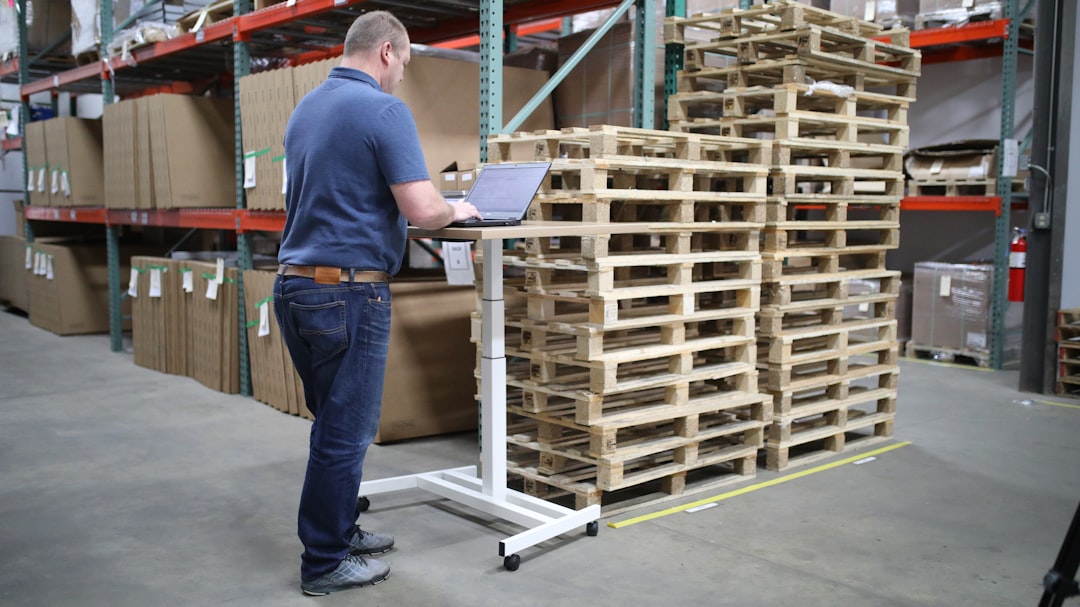
 Photo by Benoit Debaix on Unsplash
Canada's federal government is now giving Canadian suppliers a real edge on public contracts. If you sell to Ottawa, or want to, that changes how you register, how you price, and what proof you need on hand before you bid. Here's what to put in place now, so you're ready rather than scrambling when a tender lands.
What the Buy Canadian Policy actually changes
The Buy Canadian Policy is a federal rule that gives Canadian-owned or Canadian-based suppliers an evaluation advantage when government departments buy goods and services. It doesn't ban foreign suppliers outright. Instead, it adjusts how bids are scored, so being Canadian becomes a measurable point in your favour rather than a nice-to-have.
The policy rolled out starting December 2025. It applies first to large, strategic-sector contracts, then widens over time to cover more of the contracts small and medium suppliers actually chase. If you want the full background on how the policy works and who wrote it, our plain-language explainer of the Buy Canadian Policy covers the mechanics in more depth.
For now, treat this as a shift you prepare for gradually, not a single deadline. The businesses that benefit most will be the ones that get their paperwork, supply chain, and pricing story sorted before the rules tighten around them.

Know which thresholds apply to you today
Not every contract is covered yet, and the dollar thresholds are moving targets through 2026. The table below is a simple snapshot to orient yourself — always check the specific tender notice for the rules that actually apply to it, since exceptions and phase-in dates vary by sector.
| Policy element | Where it stands (general guidance) | What it means for you |
|---|---|---|
| Buy Canadian evaluation advantage | Applied first to strategic-sector contracts of roughly $25M or more, expanding toward $5M or more through mid-2026 | Mid-size contracts will increasingly carry a Canadian-content scoring benefit — worth checking even if you assumed you were "too small" for this to matter |
| Canadian-content rules (steel, aluminum, wood) | Apply on large infrastructure and construction-related projects | Know your suppliers' country of origin now, before you need the paperwork under time pressure |
| Reciprocal procurement restrictions | Phasing in from spring 2026 | Most non-defence federal contracts will favour Canadian and "trusted-partner" country suppliers |
| Small Business Procurement Program | Rolling out through 2026 | Introduces proportional requirements and simpler attestations for smaller suppliers |
Because these thresholds are still expanding, don't assume a rule doesn't apply to you just because it didn't last year. Check each new opportunity against the notice's own stated requirements rather than relying on last year's assumptions.
Get your Canadian-content story straight
If you supply steel, aluminum, wood, or products built from them, buyers will increasingly want to know where those materials actually came from — not just where your business is registered. This matters most on larger construction and infrastructure contracts, where Canadian-content rules set a minimum share of materials that must originate in Canada.
Start by mapping your own supply chain. For each major input, know:
- The country where the raw material was produced or smelted, not just where you bought it
- Whether your supplier can provide documentation to prove origin
- Whether a domestic alternative exists, and at what cost difference
This exercise takes time, so don't leave it until a bid is due in two weeks. If you're not sure what counts as "Canadian content" under the new rules, our guide to what Canadian content requirements actually mean breaks down how the calculation works and what documentation buyers typically ask for.
Many small businesses are already feeling tariff pressure and supply-chain disruption from other directions. Reworking sourcing to lean more Canadian can help on both fronts at once — it may reduce tariff exposure while also improving your score under Buy Canadian rules.
Tighten up your paperwork before you need it
A federal buyer under time pressure will not wait for you to track down a missing certificate. The government is rolling out a shared "Tell Us Once" attestation system, designed to let you confirm your Canadian-supplier status, ownership structure, and content compliance once, rather than re-submitting the same proof on every bid.
To get ahead of this:
- Make sure your Supplier Registration Information (SRI) profile on CanadaBuys is complete and current
- Gather ownership documentation that proves your Canadian-supplier status in one place
- Keep supplier country-of-origin records updated as your sourcing changes, not just at bid time
If you haven't registered as a supplier yet, that needs to happen first — nothing above works without a current CanadaBuys profile behind it. And once the attestation system is live in your sector, our guide to using Tell Us Once attestations explains how to set it up so you're not re-keying the same information on every submission.
Understand the reciprocal procurement rules coming in spring 2026
Starting spring 2026, reciprocal procurement rules will restrict most non-defence federal contracts to Canadian suppliers and suppliers from "trusted-partner" countries — nations that offer Canadian firms similar access to their own government contracts. If your business relies on components, subcontractors, or partners from countries outside that circle, it's worth mapping that exposure now.
This isn't a reason to panic. Most small and medium Canadian suppliers are already well positioned, since the rule is aimed at levelling the playing field against countries that don't offer Canada reciprocal access, not at penalizing ordinary domestic supply chains. But if part of your bid depends on an overseas subcontractor, check whether that relationship falls inside or outside the trusted-partner list before you build your next proposal around it.
For a fuller breakdown of how these restrictions work and who they actually affect, see our explainer on reciprocal procurement.
Watch the Small Business Procurement Program rollout
Alongside Buy Canadian, the government is phasing in a Small Business Procurement Program through 2026. It introduces proportional requirements — meaning the paperwork and bonding expected of you scale with the size of the contract, rather than applying the same heavy compliance burden to a $50,000 job as a $5 million one. It also promises plain-language tender summaries, so you can assess fit faster without wading through a full statement of work first.
This program is being built specifically with smaller suppliers in mind, and it will likely make it easier — not harder — for you to compete once it's fully in place. Keep an eye on new opportunities tagged for this stream as they appear.
Build a simple readiness checklist
You don't need to overhaul your business overnight. A short, honest readiness check now saves you from a rushed scramble later:
- Confirm your CanadaBuys SRI profile is complete, accurate, and lists the correct NAICS codes for your sector
- Document the country of origin for your key inputs, especially steel, aluminum, and wood
- Identify which of your current suppliers or subcontractors are outside Canada, and whether they're in a trusted-partner country
- Review your last few bids to see whether Canadian-content or reciprocal rules would have changed your competitiveness
- Bookmark opportunity pages for your category and province so you notice relevant new tenders as thresholds expand
None of these steps require a legal team or a big budget. They're mostly about getting information you likely already have written down in one place, so you can act on it quickly when a tender window opens.
These rules will keep shifting through 2026, and the details on any single notice can change between one tender and the next. The businesses that do well will be the ones that treat Buy Canadian readiness as an ongoing habit — checking sourcing, keeping paperwork current, and reading each new tender's specific requirements — rather than a one-time project to finish and forget.