
Choosing between provincial and federal opportunities — where to focus first
Federal or provincial contracts first? A plain-English guide to the 2026 rule changes and a simple framework for deciding where your business should focus.
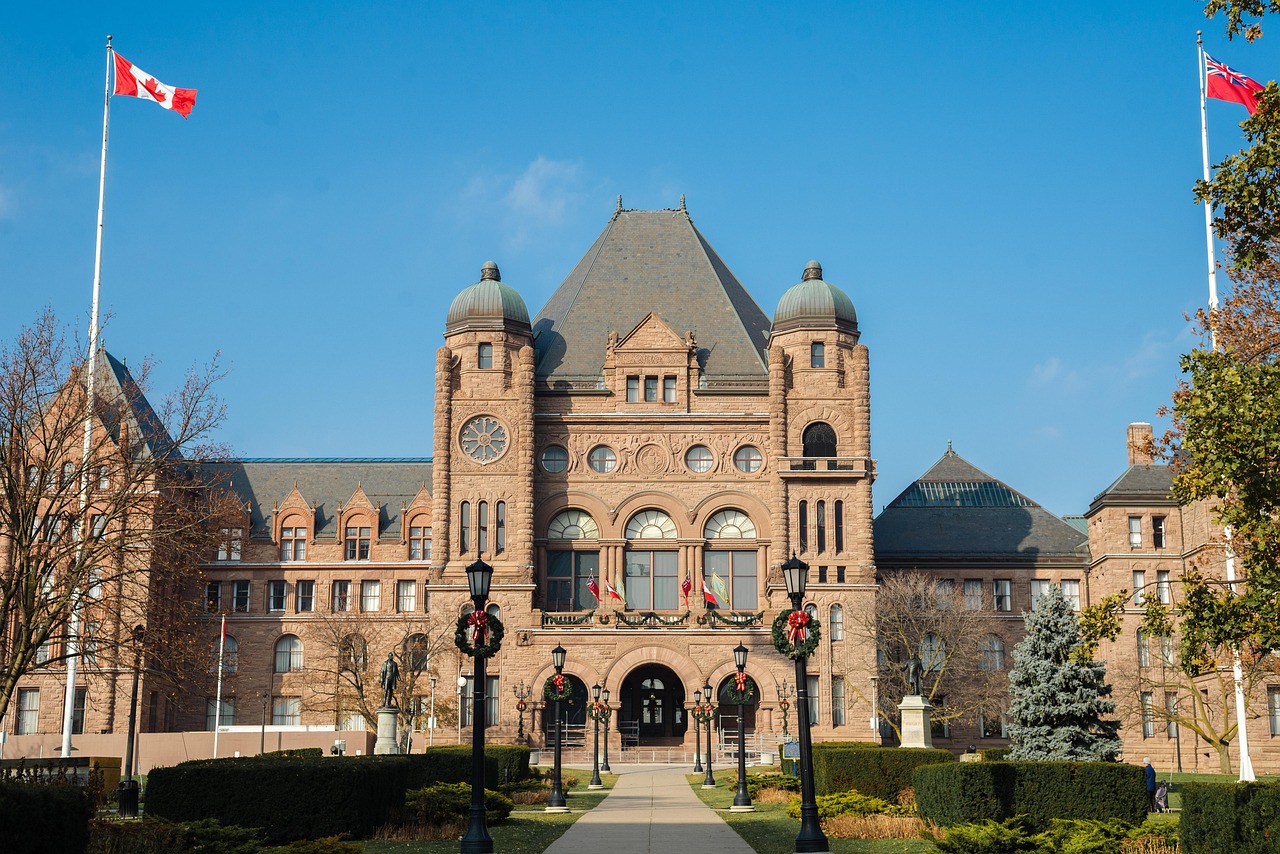
 Image by pcowan5188 from Pixabay
If you sell to government, you have a choice to make early: chase federal contracts, or focus on your province first. Both are real markets. Both have rules that changed a lot in 2026. Getting this choice right can save you months of wasted effort — and pointed at the wrong door, even a strong bid goes nowhere.
This guide walks through the real differences between federal and provincial buying, what changed this year, and a simple way to decide where to put your energy first.
Federal and provincial buying are not the same market
Federal procurement means contracts bought by the Government of Canada — departments like Public Services and Procurement Canada, the military, and federal agencies. These notices are posted on CanadaBuys, the federal government's central tender website. Federal buyers follow national rules and, for larger contracts, international trade agreements.
Provincial procurement is different. Each province runs its own system, with its own portal, its own rules, and its own definition of a "small" or "local" supplier. Ontario, British Columbia, Alberta, and Quebec all buy independently of Ottawa and of each other. Municipalities and school boards add a third layer again. If the difference between these levels is still fuzzy, our plain-language breakdown of federal, provincial and municipal procurement is a good five-minute read before you go further.
The practical result: a business that only watches CanadaBuys is missing most of the Canadian public sector. Provinces, cities, hospitals, universities, and utilities together buy far more, in total, than the federal government does. But federal contracts tend to be bigger on average, and the process is more standardised, which suits some businesses better than others.
What changed federally in 2026
The federal market shifted meaningfully this year, and it's worth understanding before you decide to focus there.
A Buy Canadian Policy started rolling out in December 2025. It gives Canadian suppliers an evaluation advantage — extra scoring points, in effect — on federal contracts in strategic sectors. Right now it applies to contracts of $25 million or more, and the government has said it plans to lower that threshold to $5 million by the middle of 2026. Large projects also carry new Canadian-content rules for materials like steel, aluminum, and wood. If you work in a sector likely to be caught by these rules, our explainer on preparing for the Buy Canadian Policy covers what to check first.
Alongside that, new reciprocal procurement rules are due in spring 2026. In plain terms, "reciprocal" means Canada will only give trade-agreement access to countries that give Canadian suppliers similar access in return. Suppliers from countries without that kind of deal may be shut out of most non-defence federal contracts. For many Canadian small businesses, that's good news — less competition from certain foreign bidders.
There's also a Small Business Procurement Program rolling out through 2026, built specifically for smaller suppliers. It introduces "proportional requirements" — meaning the paperwork and experience a buyer asks for should scale down for a smaller contract, not stay fixed at big-business levels. It also brings in a shared "Tell Us Once" attestation system, so you fill in standard supplier declarations once instead of retyping them for every bid, plus plain-language summaries of what each tender actually wants. If you think your business might fit this stream, our guide to qualifying for federal small business procurement walks through the criteria.
None of this makes federal bidding easy. It does make it more approachable for a smaller supplier than it was a year ago — if you meet the qualifying rules.
What's changing provincially
Provinces are moving too, mostly in a direction that helps small businesses. Several provinces have been removing interprovincial trade barriers — the old rules that made it harder for a business registered in one province to bid in another. As those barriers come down, a supplier based in, say, Manitoba can more easily bid on work in Saskatchewan or Alberta without hitting extra local-registration hurdles. Our piece on interprovincial trade reform covers which provinces have moved fastest and what it means for cross-border bidding.
Provincial and municipal buyers also tend to run smaller, more frequent contracts — resurfacing a parking lot, supplying IT support to a regional health authority, catering a training event. These are often a more natural entry point for a business with no government track record yet, simply because the contract values and the paperwork are smaller.
Comparing the two markets
Here's a general comparison to help you get oriented. Treat the numbers as a rough guide — exact thresholds shift over time and vary by agreement, so always check the specific notice.
| Feature | Federal | Provincial (varies by province) |
|---|---|---|
| Main portal | CanadaBuys | Separate portal per province (e.g. Ontario's tender site, BC Bid, Quebec's SEAO) |
| Governed by | National rules plus trade agreements (WTO-AGP, CUSMA, CFTA) | Mostly the Canadian Free Trade Agreement (CFTA), plus provincial policy |
| Typical contract size | Wider range, more large and mid-size contracts | More small and mid-size contracts, especially at the municipal level |
| Buy Canadian preference | Applies now to large strategic-sector deals, expanding through 2026 | Varies; some provinces have their own local-preference rules |
| Registration effort | One central profile via CanadaBuys covers all federal buyers | Often a separate profile needed per province or per portal |
| Competition level | Can attract national and, where trade rules allow, foreign bidders | Often more local competition, especially below trade-agreement thresholds |
| New-supplier friendliness | Improving via the Small Business Procurement Program | Generally easier entry point due to smaller contract sizes |
If registration itself is new territory, our step-by-step guide to registering on CanadaBuys covers the federal side in detail.

Where should you actually focus first?
There's no single right answer, but a few honest questions will point you in the right direction.
How big is your business, really? If you have fewer than a handful of staff and modest annual revenue, provincial and municipal contracts are usually a gentler place to start. The paperwork is lighter, the buyer is often easier to reach for questions, and a single missed clause is less costly when the contract is worth $40,000 rather than $4 million.
Do you already sell across provinces? If your business already ships or serves clients in more than one province, interprovincial trade reform makes it worth watching more than one provincial portal — not just your home one.
Is your sector on the strategic list? Buy Canadian Policy rules currently target specific strategic sectors at the federal level. If you're not in one of those sectors and your contracts are well under the current thresholds, the federal advantage may not apply to you yet — though it's worth tracking as the threshold drops toward $5 million through 2026.
Can you handle a longer sales cycle? Federal contracts, especially larger ones, often take longer to close — from posting to award. If your business needs revenue sooner rather than later, smaller and more frequent provincial or municipal contracts may suit your cash flow better.
Are you tariff-exposed? Businesses that rely on imported materials or components are feeling real cost pressure from tariffs and supply-chain disruption right now. That pressure cuts both ways: it can make Canadian-content rules a genuine advantage if your supply chain is already domestic, or a genuine obstacle if it isn't.
A simple starting rule: new suppliers with limited capacity should build early wins provincially or municipally, then use that track record to bid federally once the paperwork and scale make sense. Established suppliers with capacity to spare should watch both markets, because contract volume and the Buy Canadian advantage both favour bidding wider.
Don't decide once and forget it
This isn't a permanent choice. Revisit it every few months, because both markets keep changing — new thresholds, new trade rules, new portals coming online. Whichever level you focus on, a simple bid/no-bid scorecard helps keep the decision consistent rather than based on gut feeling each time; our guide to building one is a practical starting point.
Whatever you decide, the fastest way to see what's actually out there — federal, provincial, and municipal, side by side — is to search live opportunities directly rather than guess. Tendarix's live tender search lets you filter by level of government, province, and category in one place, so you can compare real, current opportunities instead of general averages.
Federal and provincial procurement will likely keep converging over the next couple of years — shared attestation systems, falling trade barriers, and similar plain-language rules are all pulling in that direction. For now, though, treat them as two different markets with two different rhythms, and choose the one that matches where your business actually is today.