
Reading trade agreement thresholds — which tenders you're actually eligible for
Learn how Canadian trade agreement thresholds (CFTA, WTO-AGP, CUSMA) decide which government tenders your business can legally bid on.
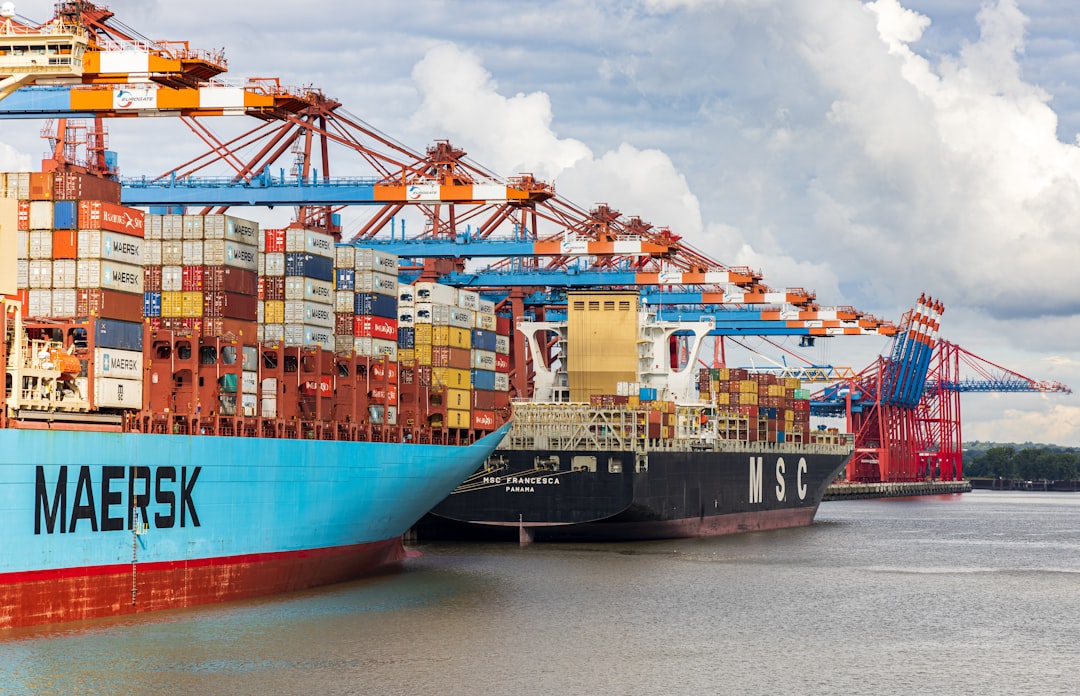 Photo by Dominik Lückmann on Unsplash
Every public tender in Canada sits inside a web of trade rules, and those rules decide who is even allowed to bid. Get the thresholds wrong and you can waste days on a tender that was never open to you — or worse, skip one you were fully eligible for. This guide breaks the rules down into plain language so you can read any notice and know, in under a minute, whether it's worth your time.
What a trade agreement threshold actually is
A trade agreement threshold is a dollar value set out in a trade deal. Once a contract's estimated value crosses that line, the buyer must follow stricter, more open competition rules — usually meaning the tender has to be posted publicly and opened up to suppliers from partner regions, not just a shortlist of local vendors.
Below the threshold, a government body can often buy more informally: get a few quotes, use a pre-approved supplier list, or even award the work directly. Above it, they generally must run a full, publicly advertised competition. The threshold itself doesn't decide who wins — it decides how open the competition has to be, and who gets a legal right to bid.
Three agreements matter most for Canadian suppliers:
- CFTA (Canadian Free Trade Agreement) — covers trade between provinces and territories, plus their public bodies.
- WTO-AGP (World Trade Organization Agreement on Government Procurement) — an international deal that opens up Canadian federal contracts to bidders from other member countries, and vice versa.
- CUSMA (Canada-United States-Mexico Agreement) — the successor to NAFTA, governing procurement access between the three North American countries.
If you want the full mechanics of each one, our dedicated explainer on WTO-AGP, CFTA and CUSMA goes deeper than this article can. Here, we're focused on what the numbers mean for your bid/no-bid decision.

Why the threshold changes by buyer, sector and category
The most confusing part for new bidders is that there isn't one single threshold. The dollar figure depends on three things at once: which level of government is buying, what kind of contract it is, and what's actually being purchased.
Level of government. Federal departments have different thresholds than Crown corporations, which have different thresholds again from provincial ministries or municipalities. A federal department might trigger full open competition at a much lower value than a municipal water authority buying the same kind of service.
Contract type. Goods, services and construction are treated differently. Construction thresholds are usually set much higher than goods or services, because construction projects tend to be larger by nature and because trade agreements carve them out separately.
Sector. Some sectors are excluded from certain agreements entirely — defence and national security procurement, for example, is often carved out of WTO-AGP coverage. Cultural industries and Indigenous-specific procurement can also sit outside standard thresholds, since these often follow separate set-aside rules rather than open-competition thresholds.
This is exactly why two tenders that look similar on the surface can follow completely different rules. A $90,000 IT services contract from a federal department might already be open to WTO-AGP bidders, while a $90,000 construction contract from the same department might sit well under its threshold and never leave a closed local list.
A simple threshold reference table
Actual dollar thresholds are reviewed and adjusted periodically (some are indexed and revised every two years), so treat the figures below as a general shape rather than numbers to quote in a bid. Always check the specific notice and the buyer's own procurement policy for the number that applies on the day you're bidding.
| Agreement | Applies to | Typical pattern |
|---|---|---|
| CFTA | Provincial, territorial and municipal bodies | Generally lower thresholds for goods and services than construction; opens bidding across all provinces and territories |
| WTO-AGP | Federal departments and listed federal entities | Higher thresholds than CFTA in most categories; some sectors (defence, security) excluded |
| CUSMA | Federal entities trading with US and Mexican suppliers | Thresholds broadly track WTO-AGP for covered entities; some carve-outs differ by country |
The pattern to remember: construction thresholds sit above goods and services thresholds in nearly every agreement, and federal thresholds tend to sit above provincial ones. When you're scanning live tender search, a quick mental check against this pattern tells you roughly how open the competition is likely to be before you even open the full notice.
How this connects to Buy Canadian and reciprocal procurement rules
Trade agreement thresholds haven't stood still. Since December 2025, a federal Buy Canadian Policy has been giving Canadian suppliers an evaluation advantage on procurements in strategic sectors valued at $25 million or more, with that scope expected to widen to contracts of $5 million or more by mid-2026. Large projects in these sectors also carry Canadian-content rules for materials like steel, aluminum and wood.
This matters alongside trade thresholds because the two systems now interact. A contract can be open to international bidders under WTO-AGP or CUSMA rules and still give a scoring advantage to Canadian-content suppliers under the Buy Canadian Policy. Trade thresholds decide who can bid; Buy Canadian rules can shape who's likely to win once they do. For the mechanics of that advantage, see our plain-language explainer on the Buy Canadian Policy.
On top of that, reciprocal procurement rules starting spring 2026 will restrict most non-defence federal contracts to Canadian suppliers and suppliers from trusted partner countries. This changes who is realistically eligible on a growing share of tenders, even where a trade agreement threshold technically opens the door.
If tariffs or supply-chain shifts affect your inputs, it's worth checking how exposed your business is before you commit serious bid-writing time to a contract with Canadian-content conditions attached.
Reading a real notice: where to find the number
Every posted tender should state, directly or indirectly, which trade agreements apply. Here's where to look:
- The trade agreement field. Many notices on CanadaBuys and provincial portals list applicable agreements explicitly — look for a line naming CFTA, WTO-AGP or CUSMA.
- The estimated contract value. Compare this to the threshold pattern in the table above for the buyer's level of government and the contract type.
- Eligibility or geographic restrictions. Some notices state outright that only Canadian suppliers, or only suppliers from a specific province, may bid. This overrides the general threshold pattern for that notice.
- Set-aside flags. A tender might be reserved for Indigenous businesses, small businesses under the emerging Small Business Procurement Program, or another defined group, regardless of its dollar value.
If a notice doesn't say which agreement applies, or the language is unclear, don't guess. Treat it as a compliance question and, if there's a question period open, ask the buyer directly rather than assuming and risking a wasted bid.

What's changing for small businesses in 2026
Trade thresholds set the outer boundary of who can bid. Inside that boundary, a separate and newer set of rules is reshaping how small businesses actually compete. The Small Business Procurement Program, rolling out through 2026, introduces proportional requirements — meaning contract conditions (like insurance minimums or past-performance history) scale down for smaller businesses instead of using a single bar for everyone.
The program also brings a shared "Tell Us Once" attestation system, so you register key compliance information once rather than re-submitting it for every bid, and plain-language tender summaries designed to make eligibility clearer at a glance. If you haven't looked at how this affects your bidding shortlist yet, our guide to qualifying for the federal Small Business Procurement stream walks through the qualification criteria in more detail.
Provinces are moving in a similar direction from another angle: several are actively removing interprovincial trade barriers, which should make it easier for a business registered in one province to bid competitively in another under CFTA. If you've been bidding only in your home province, this is a good moment to check opportunities by category and province for notices you might now be eligible for.
A practical checklist before you commit
Before you spend real time on a bid, run through this short list:
- Confirm the buyer's level of government (federal, provincial, territorial or municipal) — this sets which agreements can apply.
- Check the contract type (goods, services or construction) — thresholds differ by category.
- Compare the estimated contract value to the relevant threshold pattern.
- Look for explicit eligibility restrictions or set-aside flags in the notice text.
- Check whether Buy Canadian or reciprocal procurement rules narrow eligibility further, even if the trade threshold is met.
- If your business qualifies under the Small Business Procurement Program, check whether proportional requirements apply.
- When in doubt, ask during the question period rather than assuming.
This is also a good moment to build your own shortlisting habits. Pairing threshold-reading with a simple bid/no-bid scorecard turns this from a one-off check into a repeatable filter you can run on every notice that lands in your search results.
Trade agreement thresholds can feel like small print, but they're really a map of where your business is legally allowed to compete. Learn the pattern once, apply it consistently, and you'll spend far less time chasing tenders that were never open to you — and more time on the ones you can actually win.